

Pot Size: 10"
Accepted Scientific Name: Echinopsis 'Flying Saucer'
Origin and Habitat
Echinopsis 'Flying Saucer' is a spectacular hybrid developed by renowned cactus breeder Hans Bircher of Germany. Created by crossing South American Echinopsis species, this cultivar combines vigorous growth with exceptionally large, brilliantly coloured flowers. While it has no natural habitat, its parent species originate from Argentina, Bolivia, Paraguay, Uruguay, and southern Brazil, where they grow on rocky hillsides, grasslands, and well-drained mountain slopes. Adapted to warm summers and cool, dry winters, this hybrid performs exceptionally well in containers, greenhouses, and sunny gardens.
Description
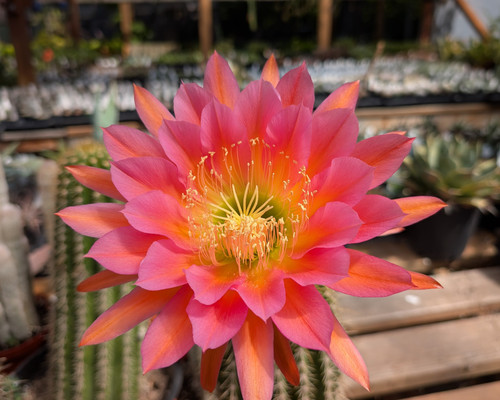
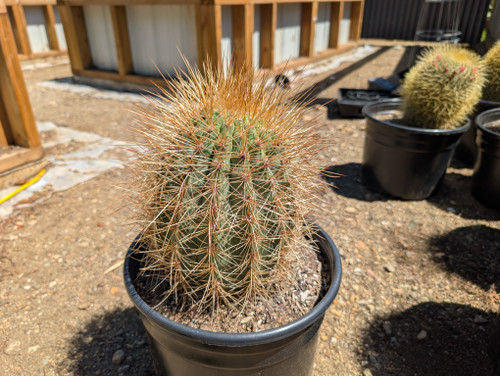
Echinopsis 'Flying Saucer' is a clustering cactus producing rounded to short cylindrical, dark green stems reaching 4–8 inches (10–20 cm) tall and 3–5 inches (8–13 cm) in diameter. Mature plants develop multiple offsets, forming attractive clumps over time. During late spring through summer, the plant produces spectacular fragrant flowers measuring up to 8 inches (20 cm) across. The blooms feature broad petals in vivid lavender-pink with a lighter throat and are among the largest produced by any Echinopsis hybrid. Flowers typically open during the evening and remain open into the following day, creating an unforgettable display.
Cultivation
Zone: 9–11
Temperature: 5°C to 35°C
Growth Rate: Moderate to fast.
Soil: Use a sharply drained cactus soil containing pumice, coarse mineral aggregate, and organic matter. Avoid soils that remain wet for extended periods.
Watering: Water thoroughly when the soil has completely dried during active growth. Keep nearly dry throughout the winter dormant period.
Fertilizing: Feed every 3–4 weeks during spring and summer with a balanced cactus fertilizer diluted to half strength.
Light: Full sun to bright light. Light afternoon shade is beneficial in extremely hot climates to protect the stems while encouraging abundant flowering.
Pests and Diseases: Generally resistant to pests but may occasionally develop mealybugs, spider mites, or scale insects. Excess moisture and poor drainage can cause root rot.
Propagation
Readily propagated from offsets or by seed, although seed-grown plants will not produce identical flowers to the hybrid.