
Pot Size: 6"
Accepted Scientific Name: Echinopsis formosa (syn. Soehrensia formosa, Trichocereus formosus)
Origin and Habitat:
Echinopsis formosa is native to the high-altitude deserts and rocky mountain slopes of Argentina, Bolivia, and northern Chile. It grows at elevations of 2,000–4,000 metres where intense sunlight, cool nights, seasonal drought, and well-drained mineral soils create challenging growing conditions. Adapted to these harsh environments, this species has developed exceptional drought tolerance and cold hardiness, making it one of the most resilient columnar cacti in cultivation.
Description:
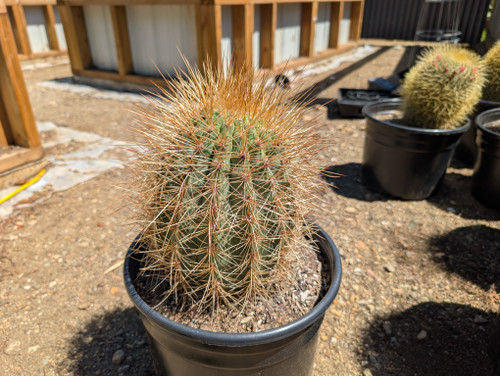
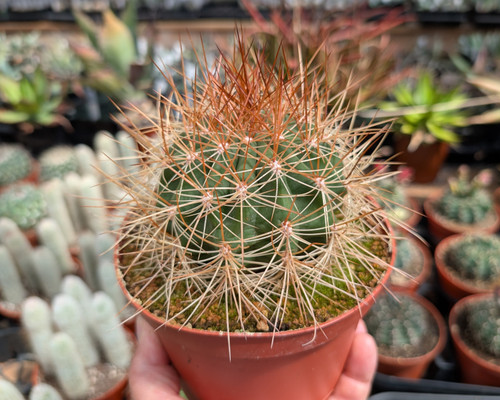
Echinopsis formosa develops stout columnar stems that are blue-green to grey-green in color and divided into prominent ribs lined with dense clusters of golden-yellow to amber spines. Plants typically reach 24–72 inches tall and 12–24 inches wide, occasionally producing branches as they mature. During late spring and summer, mature specimens produce spectacular funnel-shaped flowers up to 4 inches across. The brilliant scarlet-red to orange-red blooms emerge from the upper portions of the stems and provide a stunning contrast against the colorful spination. Its combination of dramatic flowers, architectural growth, and exceptional hardiness has made it a favorite among collectors and cold-climate cactus enthusiasts.
Cultivation
Zone: 7b–11
Temperature: -15 to 35°C
Growth Rate: Moderate
Soil: Extremely well-draining cactus soil containing pumice, gravel, and mineral aggregates
Watering: Water thoroughly during active growth, allowing soil to dry completely between watering; maintain dry conditions during winter
Fertilizing: Every 2–3 weeks during active growth using a diluted balanced fertilizer
Light: Full sun
Pests and Diseases: Generally resistant; excessive winter moisture may lead to root rot and stem damage
Propagation:
Primarily propagated from seed. Seedlings grow steadily and develop increasingly robust spination and flowering potential as they mature.