

Pot Size: 3.5" pot
Accepted Scientific Name: Yucca gloriosa L. – Variegated Form
Origin and Habitat
Yucca gloriosa is native to the southeastern United States, particularly coastal areas from North Carolina south through Georgia and Florida. It occurs naturally in sandy coastal soils, dunes, open scrub, and other dry, well-drained habitats. Variegated forms are horticulturally selected for their colourful foliage while retaining the species' tolerance of drought, wind, poor soils, and coastal conditions.
Description
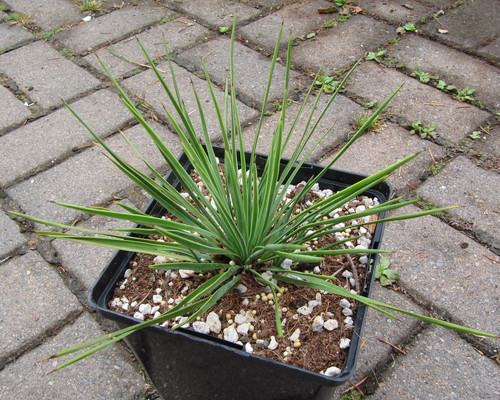
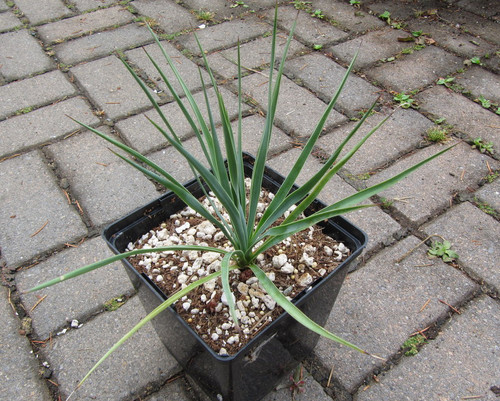
Variegated Yucca gloriosa is a striking evergreen architectural plant producing rosettes of long, narrow, sword-shaped leaves. The foliage features green central bands contrasted by creamy yellow to ivory margins, often developing attractive pink to reddish edging under cool temperatures or strong light. As shown in our young plants, the variegation is visible from an early age. Mature specimens gradually form woody trunks and can reach approximately 4–8 feet tall and 3–5 feet wide. Established plants may produce impressive upright flower stalks bearing numerous creamy white, bell-shaped flowers.
Cultivation
Zone: 7–10
Temperature: Approximately -15 to 30°C once established; young container plants should receive additional protection from severe cold.
Growth Rate: Slow to moderate.
Soil: Well-drained sandy or gritty soil with added pumice; avoid heavy, persistently wet soils.
Watering: Water regularly while establishing, allowing the soil to dry between waterings. Mature plants are highly drought tolerant. Reduce watering substantially during winter.
Fertilizing: Feed lightly in spring with a balanced, low-nitrogen fertilizer. Excessive feeding is unnecessary.
Light: Full sun to partial sun. Bright light encourages compact growth, strong variegation, and attractive pink-red leaf margins.
Pests and Diseases: Generally robust. Watch for scale, mealybugs, spider mites, and leaf spot. Root rot can occur in poorly drained or consistently wet soil.
Propagation
Propagate variegated plants vegetatively from offsets, basal shoots, or stem sections to maintain their characteristic foliage. Seed-grown plants may not reproduce the same variegation.