

Pot Size: 3.5" pot
Accepted Scientific Name: Yucca glauca Nutt.
Origin and Habitat
Yucca glauca, commonly known as Soapweed Yucca or Great Plains Yucca, is native to the central Great Plains of North America, extending through parts of Canada and the United States. It occurs naturally in dry prairies, grasslands, sandy plains, rocky slopes, and open scrub. The species is adapted to continental climates with hot summers, very cold winters, periodic drought, and lean, rapidly draining soils.
Description
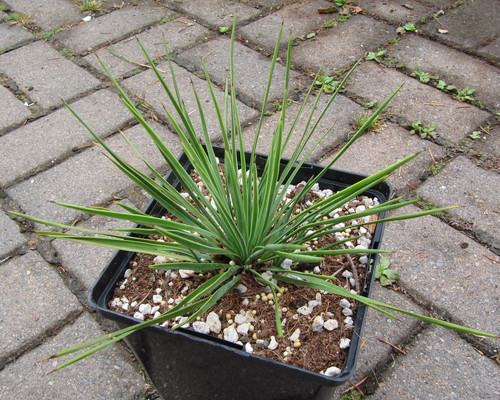
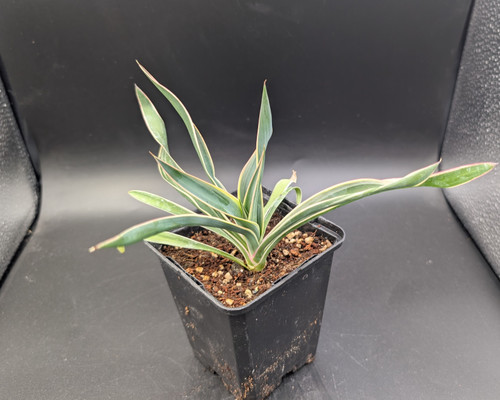
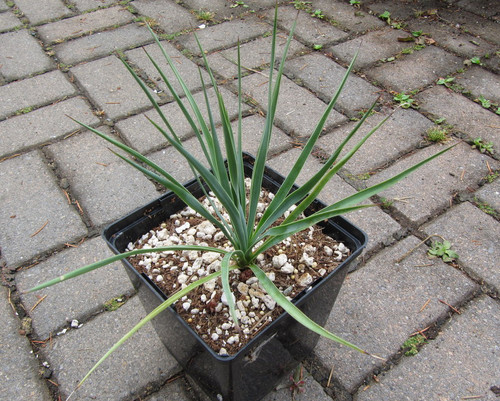
Yucca glauca is a highly cold-hardy evergreen perennial forming compact rosettes of long, narrow, blue-green to grey-green leaves. The stiff to slightly flexible leaves have finely fibrous margins and sharp terminal tips, giving plants a distinctive architectural appearance. Mature rosettes generally reach 18–30" tall with foliage spreading approximately 2–3 feet wide. Established plants produce impressive upright flower stalks that can reach 3–6 feet tall, carrying numerous creamy white to greenish-white, bell-shaped flowers. Its combination of drought tolerance, cold hardiness, and dramatic form makes it excellent for xeriscaping, rock gardens, dry borders, and hardy succulent collections.
Cultivation
Zone: 3–9
Temperature: Extremely cold hardy, tolerating approximately –35°C or lower when established in well-drained soil.
Growth Rate: Slow to moderate.
Soil: Lean, sandy or gritty, exceptionally well-drained soil amended with pumice or gravel. Avoid heavy, water-retentive soil.
Watering: Water moderately while establishing, allowing the soil to dry between waterings. Established plants are highly drought tolerant and require little supplemental water.
Fertilizing: Minimal fertilizer is required. A light feeding in spring is sufficient in poor soils.
Light: Full sun is preferred for dense, compact growth and strong blue-grey foliage.
Pests and Diseases: Generally very resistant to pests and diseases. Root and crown rot can occur when grown in persistently wet or poorly drained soil.
Propagation
Propagate from seed, offsets, or divisions from established plants. Seedlings develop relatively slowly but gradually form the characteristic narrow-leaved rosettes.