
Pot Size:
Accepted Scientific Name: Kleinia petraea (R.E.Fr.) C.Jeffrey
Synonym: Senecio jacobsenii G.D.Rowley
Common Names: Trailing Jade, Weeping Jade
Family: Asteraceae
Origin and Habitat:
Senecio jacobsenii is a trailing succulent native to eastern Africa, particularly Kenya and Tanzania, where it grows in rocky grasslands, open woodlands, and mountainous regions at elevations of approximately 1,300–2,450 metres. Plants inhabit well-drained soils, rocky slopes, and areas among low shrubs, where their spreading stems may root upon contact with the ground. These environments experience seasonal rainfall, warm days, cooler nights, and extended dry periods. Its fleshy leaves and stems store moisture, allowing the plant to tolerate drought. The natural trailing habit makes it particularly suitable for hanging baskets, containers, and succulent arrangements.
Description:
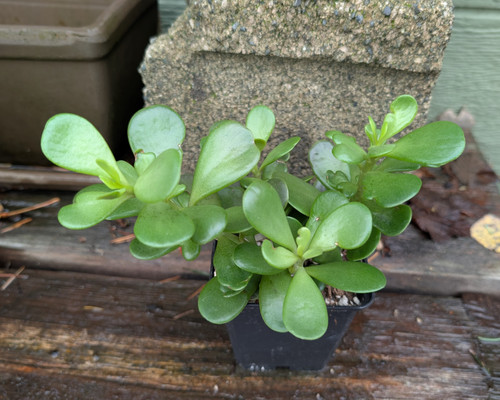
Senecio jacobsenii is an attractive, moderately fast-growing succulent characterized by its thick, trailing stems and fleshy, overlapping leaves. Plants typically reach approximately 4–8" tall, with stems extending 24–48" long, creating a cascading growth habit. The leaves are broad, oval to spoon-shaped, approximately 1.5–3" long and 0.75–1.5" wide, arranged alternately along the stems. The foliage is glossy green to grey-green, often developing attractive purple, burgundy, or reddish-bronze tones during cooler temperatures or periods of strong sunlight. Unlike true jade plants, the leaves remain oriented upward even as the stems trail downward. Mature plants produce clusters of small, tubular, brush-like flower heads, generally orange to reddish-orange, appearing primarily during autumn and winter. Its colourful foliage and graceful cascading habit make it an excellent choice for hanging baskets, mixed succulent containers, and indoor plant collections.
Cultivation:
Zone: 9–11; protect from prolonged freezing and excessive winter moisture.
Temperature: Optimal growth at 18–28 °C. Maintain winter temperatures above 5 °C for reliable container cultivation.
Growth Rate: Moderate to fast, producing long, trailing stems that may root where they contact the growing medium.
Soil: A porous, fast-draining succulent mixture containing pumice, fine gravel, and a moderate proportion of organic matter. Good drainage and root aeration are essential.
Watering: Water thoroughly during active growth, allowing the growing medium to dry between applications. Reduce watering during cooler winter months, particularly when growth slows. Avoid prolonged saturation around the roots.
Fertilizing: Apply a diluted, balanced succulent fertilizer every 2–3 weeks during active growth. Reduce or discontinue fertilizing during periods of dormancy.
Light: Bright, indirect light to partial sun. Gentle morning sunlight encourages compact growth and attractive purple or burgundy leaf colouring. Protect from intense afternoon sunlight during extreme heat.
Pests and Diseases: Susceptible to mealybugs, aphids, scale insects, spider mites, and root rot associated with excessive moisture. Poor air circulation and prolonged wet conditions may encourage fungal diseases.
Propagation:
Senecio jacobsenii is easily propagated through stem cuttings or division of established plants. Select healthy stems approximately 3–5" long and remove the lower leaves before allowing the cut ends to dry briefly. Plant cuttings in a well-draining succulent mixture containing pumice and maintain light moisture until roots develop. Stems that have already rooted along the soil surface can be separated and transplanted directly. Regular pruning encourages branching and produces a fuller, more compact plant.