

Pack Size: 20, 100, 300
Year: 2022
Accepted Scientific Name: Mammillaria sempervivi Repp.
Origin and Habitat:
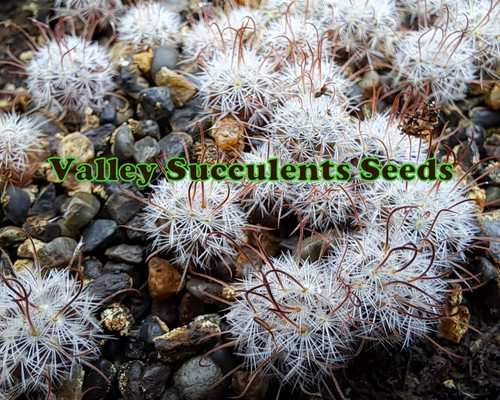
Mammillaria sempervivi is a small, slow-growing cactus native to central Mexico, particularly the states of Hidalgo and Querétaro. It inhabits dry, rocky hillsides and limestone-rich terrain within semi-arid environments, often growing among sparse shrubs and grasses. These habitats experience strong sunlight, seasonal rainfall, and extended dry periods. Plants are adapted to mineral soils with excellent drainage and can grow partially sheltered by surrounding vegetation. The species is valued for its compact form, distinctive tubercles, and attractive flowering characteristics.
Description:
Mammillaria sempervivi is a compact, globular to slightly flattened cactus characterized by broad, prominent, conical tubercles arranged in spirals. Individual stems generally reach approximately 2–4" in diameter and 1–3" tall, occasionally producing offsets with age. The plant has a distinctive blue-green to grey-green epidermis, with woolly areoles and relatively short, pale radial spines. Mature plants produce small, funnel-shaped flowers, typically creamy white to pale yellow with subtle pinkish or reddish central stripes. Flowers emerge near the crown, often forming a partial ring during spring. Small, elongated fruits develop following successful pollination.
Cultivation:
Zone: 9–11; protect from prolonged frost and winter moisture.
Temperature: Optimal growth at 20–30 °C. Maintain winter temperatures above 5 °C when dry.
Growth Rate: Slow, gradually developing compact globular stems and occasionally producing offsets.
Soil: A highly mineral, fast-draining cactus mixture containing pumice, fine gravel, and a small proportion of organic matter.
Watering: Water thoroughly during active growth, allowing the growing medium to dry completely between waterings. Keep mostly dry during winter dormancy.
Fertilizing: Apply a diluted, low-nitrogen cactus fertilizer every 2–3 weeks during active growth. Discontinue feeding during winter.
Light: Bright light to full morning sun, with protection from intense afternoon sunlight during extreme heat.
Pests and Diseases: Susceptible to mealybugs, root mealybugs, spider mites, and root rot caused by excessive moisture or poorly draining soil.
Germination Info:
Temperature: 27 °C.
Surface Sown: Yes. Sow seeds on the surface of a fine, sterilized cactus growing medium and press lightly into place without burying deeply.
Germination Time: Approximately 7–28 days, although some seeds may require longer.
Moisture: Maintain consistent surface moisture and high humidity during germination, avoiding waterlogged conditions.
Light: Bright, indirect light. Avoid direct sunlight on covered seed trays.
After Germination: Gradually increase ventilation as seedlings establish. Maintain moderate moisture until plants develop stronger root systems.