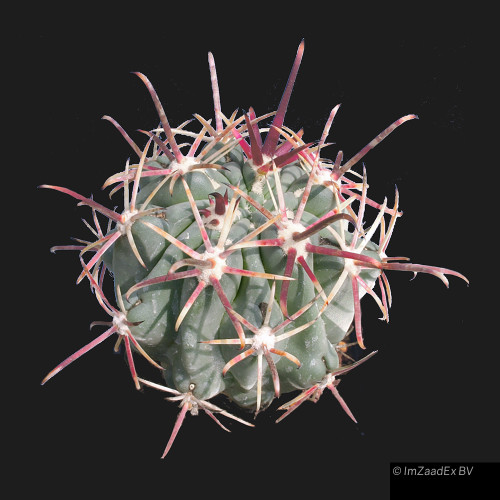


Pack Size: 20, 100, 300
Year: 2026
Accepted Scientific Name: Glandulicactus uncinatus (Galeotti) Backeb.
Synonym: Sclerocactus uncinatus (Galeotti) N.P.Taylor
Common Name: Chihuahuan Fishhook Cactus, Catclaw Cactus
Origin and Habitat:
Glandulicactus uncinatus is a distinctive cactus native to the Chihuahuan Desert region of the southwestern United States and northeastern Mexico, including Texas. It inhabits dry grasslands, rocky limestone hillsides, gravelly slopes, and open desert scrublands, where plants grow in well-drained, mineral-rich soils. These environments experience hot summers, cool winters, seasonal rainfall, and prolonged drought. Plants frequently grow among shrubs, grasses, and scattered rocks, which provide partial protection from intense sunlight. The species is particularly recognizable for its strongly hooked central spines and unusual dark-coloured flowers.
Description:
Glandulicactus uncinatus is a slow-growing, predominantly solitary cactus characterized by its globular to short cylindrical shape and distinctive hooked spines. Mature plants typically reach approximately 3–6" tall and 2–4" in diameter. The dark green to bluish-green stem develops approximately 9–13 prominent ribs divided into rounded tubercles. Each areole produces several slender radial spines, ranging from pale grey to reddish-brown, accompanied by stronger central spines. The most distinctive central spine is often flattened, dark brown, and sharply hooked at the tip. Mature plants produce unusual, funnel-shaped flowers approximately 1–1.5" across, displaying coppery-brown, reddish-purple, maroon, or dark chocolate tones. Flowers emerge near the crown during spring, followed by small reddish fruits containing numerous dark seeds. Its distinctive spination and unusual flower colouring make it highly desirable among cactus collectors.
Cultivation:
Zone: 9–11; protect from prolonged freezing and excessive winter moisture.
Temperature: Optimal growth at 18–30 °C. Maintain winter temperatures around 5–10 °C under dry conditions.
Growth Rate: Slow, gradually developing a globular to short cylindrical body with prominent tubercles and strongly hooked central spines.
Soil: A highly mineral, fast-draining cactus mixture containing pumice, fine gravel, crushed limestone, and a small proportion of organic matter. Excellent drainage is essential.
Watering: Water moderately during active growth, allowing the growing medium to dry thoroughly between waterings. Reduce watering during autumn and maintain dry conditions during winter dormancy.
Fertilizing: Apply a diluted, low-nitrogen cactus fertilizer every 2–3 weeks during active growth. Discontinue feeding during winter.
Light: Full sun to bright, filtered sunlight. Strong light encourages compact growth, healthy spination, and flowering. Protect young plants from intense afternoon sunlight.
Pests and Diseases: Susceptible to mealybugs, root mealybugs, spider mites, scale insects, and root rot associated with excessive moisture.
Germination Info:
Temperature: 27 °C.
Surface Sown: No. Sow seeds on a fine, sterilized cactus growing medium and cover lightly with fine mineral material.
Germination Time: Variable, approximately 14–60 days under favourable conditions. Some seeds may require considerably longer.
Moisture: Maintain consistent but moderate moisture during germination, avoiding saturated conditions.
Light: Bright, indirect light. Avoid direct sunlight on covered seed trays.
Dormancy: Germination may be irregular. Some seed batches may benefit from alternating temperatures or cool stratification.
After Germination: Gradually increase ventilation as seedlings establish. Maintain moderate moisture while young plants develop stronger root systems, then progressively introduce drier conditions and brighter light.