

Pack Size: 20, 100
Year:
2023
Accepted Scientific Name:
Epithelantha micromeris (Engelm.) F.A.C.Weber ex Britton & Rose
Origin and Habitat:
Epithelantha micromeris is native to the southwestern United States and northern Mexico, occurring in parts of Texas, New Mexico, Arizona, Chihuahua, Coahuila, and surrounding regions. It typically grows on exposed limestone hills, rocky slopes, gravelly flats, and desert grasslands. Plants often occur in mineral-rich, alkaline soils with excellent drainage and are adapted to intense sunlight, low rainfall, and significant temperature fluctuations.
Description:
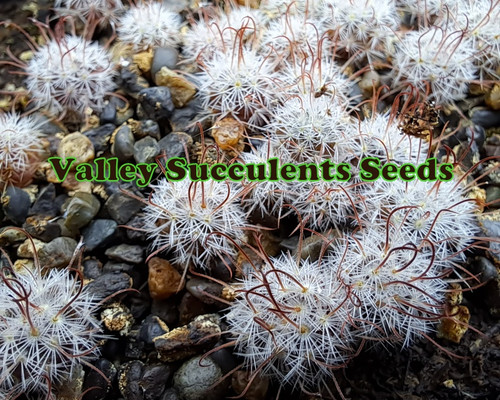
Epithelantha micromeris, commonly called Button Cactus, is a miniature cactus prized for its compact form and extremely dense covering of fine white spines. Plants are usually globular to slightly cylindrical, reaching approximately 1–3" tall and 1–2" wide, sometimes forming small clusters with age. The tiny tubercles are almost completely concealed beneath closely packed white radial spines, giving the plant a soft, silvery appearance. Small pale pink to whitish-pink flowers emerge near the crown and are followed by distinctive elongated, bright red fruits.
Cultivation:
Zone: 8–11
Temperature: Best growth at 20–30 °C; mature plants can tolerate cool conditions when completely dry but should be protected from prolonged hard frost.
Growth Rate: Slow. Seedlings remain very small for an extended period and benefit from stable growing conditions.
Soil: Use a highly porous, predominantly mineral cactus mix containing pumice and other well-draining mineral components. A slightly alkaline mix is suitable.
Watering: Water carefully during active growth, allowing the soil to dry between waterings. Reduce watering substantially in autumn and keep plants nearly dry during winter. Avoid prolonged moisture around the roots.
Fertilizing: Apply a diluted, low-nitrogen cactus fertilizer sparingly during active spring and summer growth.
Light: Bright light to full sun for established plants. Protect young seedlings from intense direct sunlight and gradually increase light levels as they develop.
Pests and Diseases: Watch for mealybugs, root mealybugs, and rot. Excessive moisture combined with poor ventilation is the primary cultivation risk.
Germination Info:
Temperature: 27 °C
Surface Sown: Yes. Sow seeds on the surface of a fine, moist, well-draining cactus seed mix and gently press them into the medium. Maintain consistent warmth and humidity during germination. Gradually increase ventilation after seedlings are established.