

Pot Size: 3.5" Pot
Accepted Scientific Name: Echeveria runyonii 'Topsy Turvy'
Origin and Habitat
Echeveria runyonii is native to the rocky hillsides of Tamaulipas, northeastern Mexico, where it grows in well-drained soils on exposed slopes with abundant sunshine. The cultivar 'Topsy Turvy' is a distinctive horticultural selection prized for its uniquely recurved foliage. Like its wild ancestor, it is adapted to warm, dry conditions and stores water in its thick leaves, making it highly drought tolerant. Its unusual form and low-maintenance nature have made it one of the most popular echeverias for containers, succulent gardens, and indoor collections.
Description
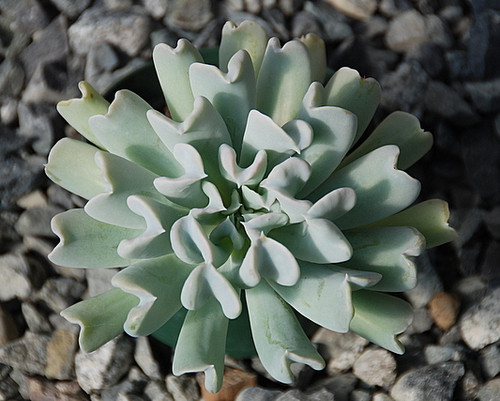
Echeveria runyonii 'Topsy Turvy' is a striking rosette-forming succulent growing 6–8 inches (15–20 cm) tall and 8–12 inches (20–30 cm) wide. Its thick, powdery blue-green leaves curl dramatically upward and inward, creating a sculptural appearance unlike most echeverias. During late spring through summer, mature plants produce slender flower stalks bearing orange to coral-pink, bell-shaped flowers with yellow interiors that attract pollinators. The symmetrical rosettes and distinctive twisted foliage make this cultivar a standout feature in containers, rock gardens, and mixed succulent arrangements.
Cultivation
Zone: 9–11
Temperature: 10°C to 35°C
Growth Rate: Moderate.
Soil: Use a well-drained cactus soil containing pumice, coarse mineral aggregate, and organic matter. Avoid heavy or poorly drained soils.
Watering: Allow the soil to dry completely between waterings. Reduce watering during winter dormancy and avoid water sitting in the rosette.
Fertilizing: Feed every 2–3 weeks during active growth with a balanced fertilizer diluted to half strength.
Light: Full sun to bright indirect light. Bright light promotes compact growth and enhances foliage colour while protecting from intense afternoon sun in very hot climates.
Pests and Diseases: Generally resistant to pests but may occasionally attract mealybugs or aphids. Overwatering and poor drainage can cause root rot.
Propagation
Readily propagated from offsets, stem cuttings, or leaf cuttings during the growing season.


