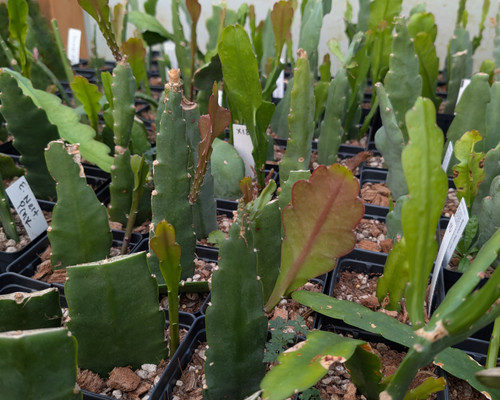

Pot Size: 3.5" Rotted Cutting
Accepted Scientific Name: Epiphyllum hybrid 'Circus Circus'
Origin and Habitat:
Epiphyllum 'Circus Circus' is a cultivated ornamental hybrid belonging to the Cactaceae family. Its ancestry is associated with tropical epiphytic cacti native to Central and South America, where these plants naturally grow on trees and rocky surfaces in humid forests. Unlike desert cacti, Epiphyllum hybrids are adapted to filtered sunlight, good air circulation, and environments with moderate moisture. 'Circus Circus' was developed through horticultural hybridization for its distinctive, colourful flowers rather than occurring naturally in the wild.
Description:
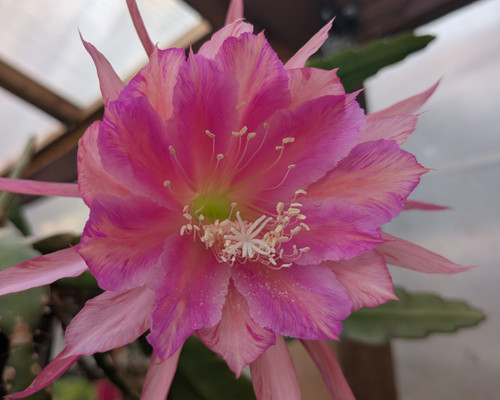
Epiphyllum 'Circus Circus' is an attractive orchid cactus hybrid prized for its large, multicoloured flowers. The blooms typically measure approximately 7–9" (18–23 cm) across, displaying lavender-purple inner petals with pink overlays, complemented by contrasting orange outer petals with golden-pink tones. The layered petals create a vibrant, tropical appearance.
The plant develops flattened, green, leaf-like stems that arch outward as they mature, making it suitable for hanging baskets or elevated containers. Mature plants can produce stems extending 18–36" or longer, depending on growing conditions. Flowering generally occurs during spring and early summer, with individual blooms lasting several days under favourable conditions.
Cultivation:
Zone: 10–11; protect from frost.
Temperature: Optimal growth at 15–28 °C. Avoid prolonged exposure below 10 °C.
Growth Rate: Moderate, developing elongated, flattened stems that become arching or pendulous with maturity.
Soil: A well-draining, organically rich mixture containing fine orchid bark, coco coir, and pumice. The growing medium should retain some moisture while allowing excellent aeration.
Watering: Water thoroughly during active growth, allowing the upper portion of the growing medium to dry slightly between waterings. Reduce watering during winter dormancy.
Fertilizing: Apply a balanced, diluted fertilizer every 2–4 weeks during active growth. Reduce nitrogen and discontinue regular feeding during winter.
Light: Bright, indirect light or filtered sunlight. Gentle morning sun is beneficial, but protect from intense afternoon sunlight.
Pests and Diseases: Susceptible to mealybugs, scale insects, spider mites, and stem rot associated with excessive moisture and poor air circulation.