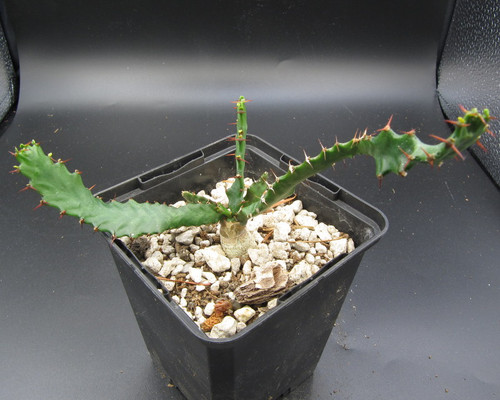


Pot Size: 10"
Accepted Scientific Name: Euphorbia resinifera
Origin and Habitat
Euphorbia resinifera is native to the Atlas Mountains of Morocco, where it grows on rocky slopes, limestone outcrops, and arid hillsides in full sun. Adapted to a harsh climate with hot, dry summers and cool winters, it thrives in shallow, mineral-rich soils with excellent drainage. This species forms extensive colonies in the wild, creating dense cushions that help conserve moisture and protect the stems from temperature extremes. It is one of the most drought-tolerant members of the genus and is highly valued for its striking architectural appearance and exceptional resilience.
Description
Euphorbia resinifera, commonly known as Moroccan Mound Spurge, is a slow-growing, clump-forming succulent that develops dense cushions of upright, four-angled blue-green stems reaching 12–24 inches (30–60 cm) tall while spreading 24–48 inches (60–120 cm) or more with age. Small paired spines line the stem edges, and tiny yellow-green cyathia (flowers) appear near the stem tips during spring. Although often mistaken for a cactus, it belongs to the spurge family and produces a milky white latex when damaged. Its compact growth habit and unique form make it an outstanding specimen for rock gardens, xeriscapes, and succulent collections.
Cultivation
Zone: 9–11
Temperature: 5°C to 35°C
Growth Rate: Slow.
Soil: Use a sharply drained cactus soil containing pumice, coarse mineral aggregate, and organic matter. Avoid heavy or water-retentive soils.
Watering: Allow the soil to dry completely between waterings. Water sparingly during winter dormancy and avoid prolonged wet conditions.
Fertilizing: Feed every 3–4 weeks during active growth with a balanced fertilizer diluted to half strength.
Light: Full sun to bright light. Best stem colour and compact growth develop with abundant sunlight.
Pests and Diseases: Generally resistant to pests but may occasionally develop mealybugs or scale insects. Overwatering can lead to root rot. Handle carefully, as the milky latex may irritate skin and eyes.
Propagation
Propagate from stem cuttings during warm weather. Allow cuttings to callus thoroughly before planting in dry, well-drained cactus soil. Wear gloves when handling due to the irritating latex.