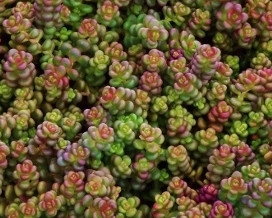


Pot Size: 3.5"
Accepted Scientific Name:
Sedum spathulifolium 'Cape Blanco'
Origin and Habitat:
Sedum spathulifolium 'Cape Blanco' is a cultivar of a species native to the Pacific Northwest of North America, particularly California, Oregon, and British Columbia. This hardy succulent is typically found growing on rocky cliffs, gravelly slopes, and well-drained coastal bluffs. In its native habitat, it endures periods of drought, cool temperatures, and full sun exposure. The 'Cape Blanco' selection originates from coastal Oregon and is adapted to survive in nutrient-poor, fast-draining soils with excellent resistance to wind and salt spray.
Description:
Sedum spathulifolium 'Cape Blanco' is a compact, low-growing succulent that forms dense, silvery-blue rosettes about 2 inches wide. The spoon-shaped leaves are covered with a chalky white bloom, giving the plant a ghostly, frosted appearance. It typically spreads 6–12 inches wide and grows 2–4 inches tall. In late spring to early summer, it produces bright yellow, star-shaped flowers on short stems that rise above the rosettes, creating a striking contrast against the pale foliage.
Cultivation:
Zone: Hardy in USDA Zones 5–9.
Temperature: Tolerates a wide range from -20°C to 25°C; prefers cool to moderate climates.
Growth Rate: Moderate, especially in spring and early summer.
Soil: Requires fast-draining soil with pumice to prevent excess moisture and root rot.
Watering: Drought-tolerant; water sparingly. Allow soil to dry completely before rewatering.
Fertilizing: Apply a balanced, diluted fertilizer every 2–3 weeks during the growing season.
Light: Prefers full sun but will tolerate partial shade. Sun exposure enhances the silver coating.
Pests and Diseases: Resistant to most pests and diseases. Watch for occasional aphids or root rot in poorly drained conditions.
Propagation:
Propagated easily by leaf cuttings, division of offsets, or stem segments. Allow cuttings to callus before placing in dry pumice-rich soil for rooting.