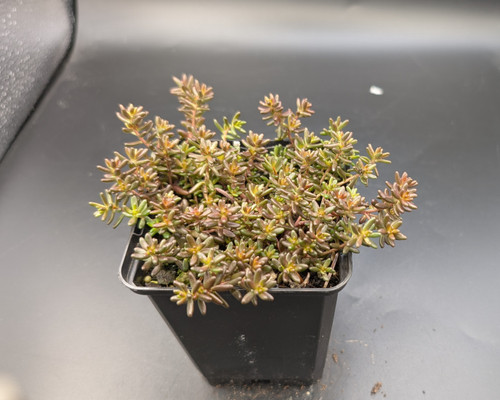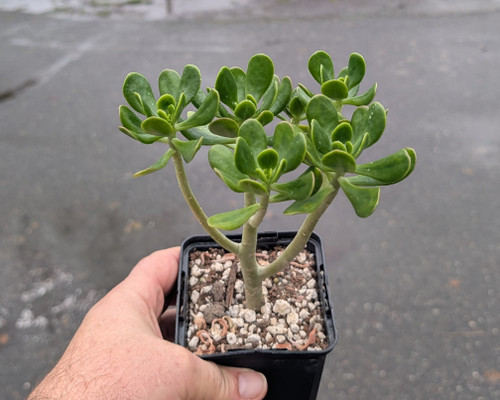


Pot Size: 3.5"
Accepted Scientific Name:
Sedum album ‘Jelly Bean’
Origin and Habitat:
Sedum album is native to much of Europe, where it naturally inhabits rocky outcrops, gravel slopes, and dry, open habitats with excellent drainage and full sun exposure. It is well adapted to nutrient-poor soils and periodic drought. The cultivar ‘Jelly Bean’ has been selected for its plump, bead-like foliage and vibrant seasonal color changes. Like the species, it performs well in harsh, exposed environments and is commonly used in rock gardens, green roofs, and container plantings.
Description:
Sedum album ‘Jelly Bean’ is a compact, mat-forming succulent reaching 2–4 inches tall and spreading 12–24 inches wide. It produces dense clusters of small, rounded, jelly bean-like leaves that shift from fresh green to shades of pink, orange, and red under strong sunlight or cooler temperatures. In early to mid-summer, clusters of tiny, star-shaped white flowers emerge just above the foliage, creating a soft contrast against the colorful leaves. Its playful texture and bright coloration make it ideal for groundcover and mixed succulent arrangements.
Cultivation:
Zone: Suitable for USDA zones 3 to 9.
Temperature: Tolerates temperatures from -30°C to 35°C.
Growth Rate: Fast, forming dense, spreading mats.
Soil: Requires sharply draining soil; amend with pumice to improve aeration and prevent excess moisture.
Watering: Water sparingly, allowing soil to dry completely between waterings. Highly drought-tolerant once established.
Fertilizing: Apply a diluted, balanced fertilizer every 2–3 weeks during active growth, though minimal feeding is required.
Light: Thrives in full sun; intense light enhances red and orange coloration.
Pests and Diseases: Generally pest-free; may develop root rot in poorly drained or overly wet soils.
Propagation:
Easily propagated by stem cuttings or division. Place cuttings on well-draining, pumice-rich soil and allow them to root with minimal moisture.