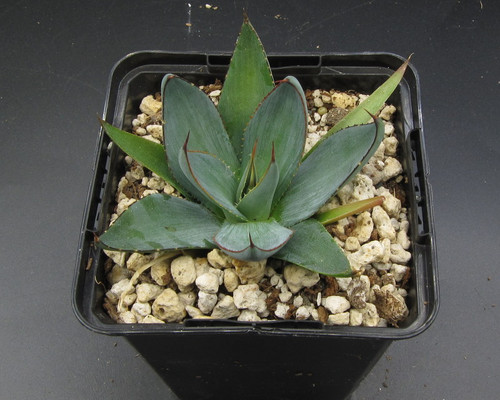


Pot Size: 4.5"
Accepted Scientific Name: Hosta ‘Blue Mouse Ears’
Origin and Habitat:
Hosta ‘Blue Mouse Ears’ is a cultivated miniature hybrid developed from species native to northeastern Asia, particularly Japan and Korea, where wild Hostas grow in cool, moist woodland environments. These habitats are typically shaded by deciduous trees, with rich, humus-heavy soils that retain moisture while allowing good drainage. This cultivar inherits its compact size and thick foliage from selective breeding, making it ideal for small garden spaces, rock gardens, and container culture.
Description:
Hosta ‘Blue Mouse Ears’ is a compact, clump-forming perennial reaching approximately 6–8 inches in height and 10–12 inches in width. It features thick, rounded, blue-green leaves with a smooth, slightly cupped form resembling small mouse ears, giving the plant its name. The foliage has a powdery, glaucous coating that enhances its blue tone. In mid to late summer, short scapes rise above the foliage bearing clusters of bell-shaped, soft lavender to pale purple flowers that attract pollinators.
Cultivation:
Zone: 3–9
Temperature: -40°C to 30°C
Growth rate: Slow to moderate
Soil: Prefers rich, well-drained soil amended with organic matter and pumice for improved aeration
Watering: Keep soil consistently moist during the growing season; reduce slightly in cooler months without drying out
Fertilizing: Apply a balanced liquid fertilizer every 2–3 weeks during active growth
Light: Best in partial to full shade; tolerates gentle morning sun but avoid hot afternoon exposure
Pests and diseases: Susceptible to slugs and snails; occasional crown rot in poorly drained soils
Propagation:
Propagation is most easily achieved by division of mature clumps in early spring or fall. Carefully separate the root mass into smaller sections, ensuring each division has healthy roots and shoots, then replant promptly in prepared soil.