

Pot Size: 4.5"
Accepted Scientific Name:
Euphorbia characias subsp. wulfenii
Origin and Habitat:
Euphorbia characias subsp. wulfenii is native to the Mediterranean region, particularly southern Europe and parts of Turkey. It naturally occurs on rocky hillsides, open woodlands, and dry scrublands where soils are well-drained and often calcareous. These habitats experience hot, dry summers and mild, wetter winters. The plant is well adapted to drought, intense sunlight, and poor soils, thriving in exposed conditions where many other species struggle. Its natural resilience makes it a popular choice for xeriscaping and low-maintenance landscapes.
Description:
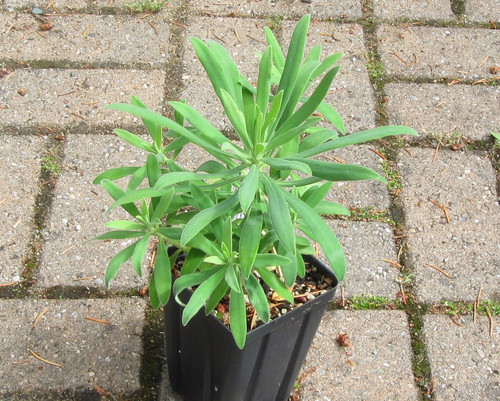
Euphorbia characias subsp. wulfenii is a bold, evergreen perennial reaching 36–48 inches tall and 24–36 inches wide. It forms upright clumps of thick, blue-green, linear leaves arranged densely along sturdy stems. In late winter to spring, it produces large, dome-shaped inflorescences composed of chartreuse to lime-green bracts surrounding small nectar-rich flowers. The flower heads can reach 8–12 inches across and create a striking contrast against the foliage. Its architectural form and vibrant color make it a standout in borders and dry garden designs.
Cultivation:
Zone: Suitable for USDA zones 6 to 10.
Temperature: Prefers 0°C to 30°C; tolerates brief dips to approximately -15°C.
Growth Rate: Moderate to fast under favorable conditions.
Soil: Not particular about soil but prefers well draining soil; amend with pumice to improve aeration and prevent excess moisture.
Watering: Water moderately during establishment, then reduce frequency. Allow soil to dry between waterings; extremely drought-tolerant once established.
Fertilizing: Apply a diluted, balanced fertilizer every 2–3 weeks during the growing season, though excessive feeding is unnecessary.
Light: Thrives in full sun; best flowering occurs in strong light.
Pests and Diseases: Generally pest-resistant; may occasionally attract aphids. Ensure good drainage to prevent root rot.
Propagation:
Propagated by seed or stem cuttings. Allow cuttings to dry and callous before planting. Use caution, as the milky sap can be irritating to skin.