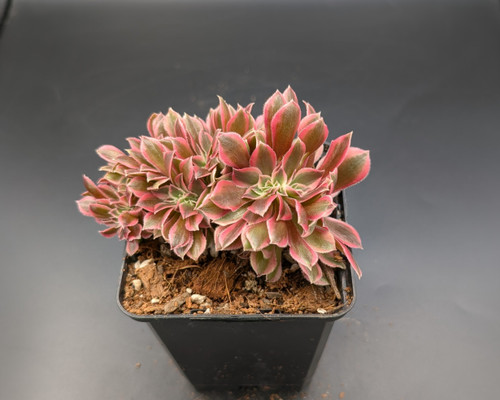


Pot Size: 3.5"
Accepted Scientific Name: Aeonium ‘Pink Witch’ (crested form)
Origin and Habitat
This crested form of Aeonium ‘Pink Witch’ is a horticultural selection maintained exclusively through vegetative propagation. Its lineage is associated with Canary Island Aeonium species adapted to volcanic slopes, rocky terraces, and coastal cliffs where drainage is rapid and temperatures remain mild year-round. These environments experience cool, moist winters and warm, dry summers, promoting seasonal colour shifts. The cresting (fasciation) is a rare genetic mutation preserved only in cultivation, where stable light, airflow, and low humidity help maintain its rippled, sculptural growth pattern and pink pigmentation.
Description
Aeonium ‘Pink Witch’ Crested forms dramatic, fan-like crests composed of tightly layered, spoon-shaped leaves that blend pastel pink, rose, and soft green tones. Plants generally reach 6–10 inches tall and 8–14 inches wide depending on crest maturity. Cool weather deepens pink and red hues. Flowers are rarely produced by crested forms, but when present they appear in branched clusters of small, yellow, star-shaped blooms.
Cultivation
Zone: Recommended for Zones 9–11.
Temperature: Prefers 10–24°C; protect from temperatures below 2–4°C.
Growth Rate: Slow to moderate depending on season and light.
Soil: Use a sharply draining mix with high pumice content to promote aeration and prevent rot.
Watering: Water moderately during active growth and reduce significantly during summer dormancy or winter cold. Allow soil to dry thoroughly between waterings.
Fertilizing: Apply a diluted low-nitrogen fertilizer every 2–3 weeks during the active growing season only.
Light: Provide bright light to full sun for best colour; offer filtered light during intense heat to avoid scorch. Indoors, high light is required to maintain compact crests and pink tones.
Pests and Diseases: Watch for mealybugs, aphids, and fungal issues from excess moisture. Ensure good airflow and avoid waterlogged conditions.
Propagation
Propagation is carried out by dividing stable portions of the crest or removing suitable offsets. Allow cut surfaces to callus fully before replanting for dependable rooting.